Palmyra in Perspective
View publication
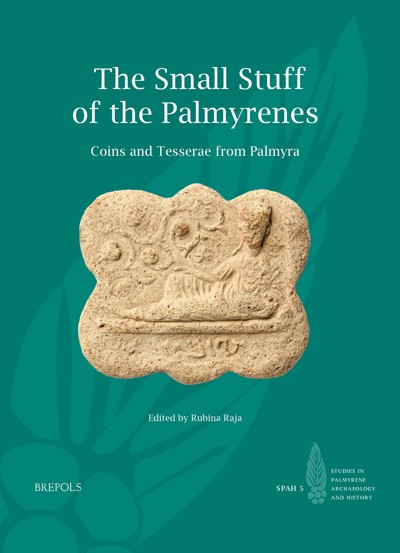
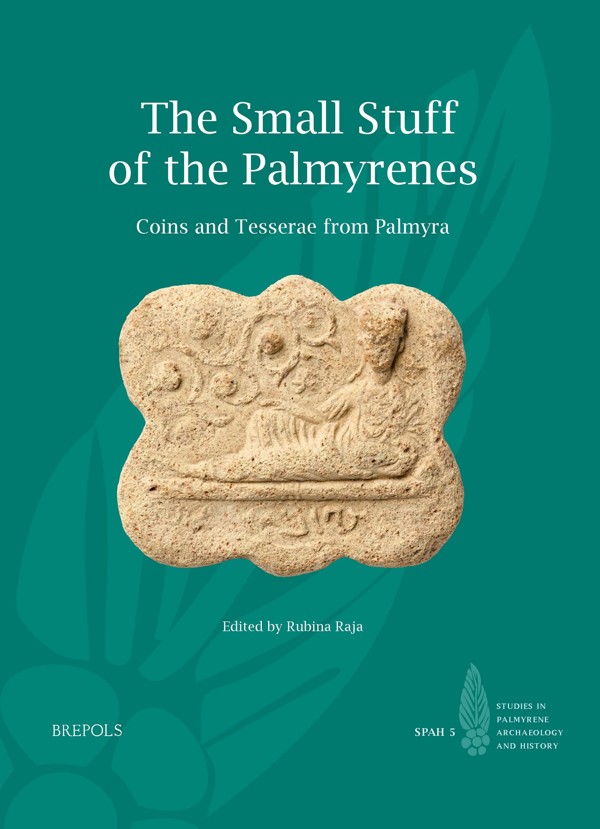
This edited volume presents new research on the coinage and so-called banqueting tesserae from Palmyra in the Syrian Desert.
Rubina Raja is Professor of Classical Archaeology and Art and between 2015-2025 she directed the Danish National Research Foundation’s Centre of Excellence: Centre for Urban Network Evolutions (grant DNRF119), Aarhus University. Currently she heads the Semper Ardens Advanced Grant project Locally Crafted Empires (funded by the Carlsberg Foundation) and the Lost Cities Rediscovered: Re-examining Excavation Histories in Late Ottoman and Mandate Western Asia project (funded by the Gerda Henkel Foundation).
The ancient city of Palmyra is, rightly, famous for its major monumental architecture and its vast corpus of funerary portraiture, most of which dates from the first three centuries AD. This material has long been central to art-historical, archaeological, and epigraphical studies of the region. However, up to now, relatively little attention has been paid to the ‘small stuff’ from Palmyra — seemingly minor items such as the enigmatic local coinage and the richly iconographic banqueting tesserae found scattered across the city’s sanctuaries — which has never been comprehensively studied, but may have had huge importance for the people who lived in Roman Palmyra.
This volume, which arises from the research project Circular Economy and Urban Sustainability in Antiquity headed by Prof. Rubina Raja, aims to redress the balance by giving new focus to these small finds with a view to studying them and better understanding their significance in Palmyrene social and religious life. Drawing together experts on Palmyra’s archaeology, history, and language, the volume offers insights and reflections into various aspects of the city’s coins and tesserae in both their local setting and their wider regional context. In doing so, the contributions gathered here open up new lines of enquiry, and at the same time underline how much we still have to learn from studying even the smallest items.
The Small Stuff of the Palmyrenes: Coins and Tesserae from Palmyra — RUBINA RAJA
Revisiting the Palmyrene Banqueting Tesserae: Conceptualization, Production, Usage, and Meaning of the Palmyrene — RUBINA RAJA
Tesserae and Prosopography — JEAN-BAPTISTE YON
Palmyrene Tesserae in the Context of Temple Administration — ALEKSANDRA KUBIAK-SCHNEIDER
Some Thoughts on Divine Representations on Palmyrene Coins and Tesserae — TED KAIZER
Caravan Trade in Palmyrene Tesserae and Coins? — EIVIND H. SELAND
Three Forgotten Tesserae and a Coin from Palmyra in the Oriental Museum at Durham University — TED KAIZER AND JEREMY HUTTON
The Production, Circulation and Function of the Local Palmyrene Coinage — NATHALIA KRISTENSEN
Palmyra’s Small Coins and their Dies: Preliminary Results — NATHANAEL ANDRADE
Civic Coins and Urban Networks: Palmyra and its Coinage in a Regional Perspective — MICHAEL BLÖMER
Bigger Stuff Beyond Palmyra: The Coinage of the Hatrans and Assyrians — KEVIN BUTCHER