Stemma codicum
View publication
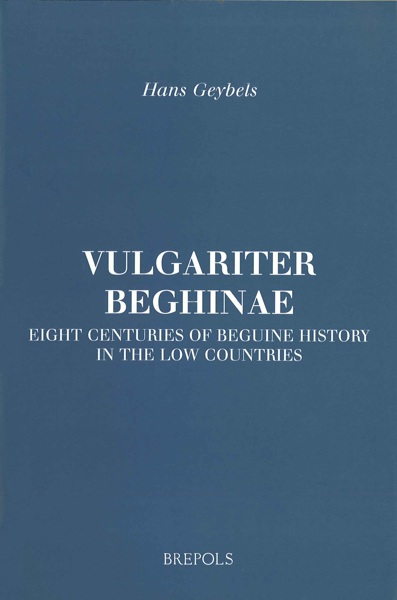
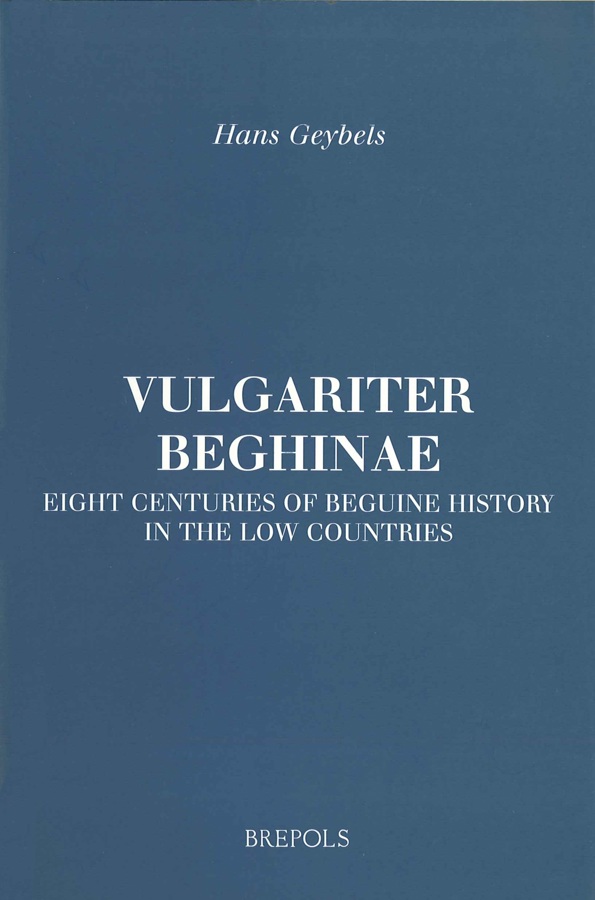
« L’étude, très synthétique, se recommande à de nombreux points de vue. Elle se lit bien ; elle a le très grand mérite de ne pas arrêter l’étude à la fin du Moyen Âge mais de suivre les avatars du mouvement, apparu en 1173 dans le diocèse de Liège, jusqu’à aujourd’hui […] ; l’A. a utilisé la bibliographie des érudits locaux très souvent en flamand […] ; elle est très joliment illustrée.»
"L’A. offre au lecteur un petit livre très pratique sur les béguines des origines à nos jours dans un cadre historico-géographique précis, celui des anciens Pays-Bas."
(Paulette L’Hermite-Leclercq, in : Revue Mabillon, 16, 2005, p. 311)
« Cette synthèse introductive au monde des béguinages est concise mais bien construite […] cette publication donne un bon aperçu de l’histoire de cette institution dans un style alerte et lisible. »
(Valerie Vermassen, in : Revue d’histoire ecclésiastique, 100, 2005)
Today, the few remaining beguines in Belgium are all elderly women. Their death will also mean the end of the beguine movement, a spiritual history lasting eight centuries that has mainly been focused in the late-medieval and early-modern Low Countries. The movement emerged during the twelfth century and spread through western Europe. Almost all members were women, committing themselves to the vita apostolica. The movement emerged in the former principality of Liège. It flourished and spread to the duchy of Brabant and the county of Flanders.
The beguine movement was perceived to be over by the second half of the twentieth century, but the romanticised image of beguines lives on. Today, many beguinages are restored and activities such as the taking of wedding photographs, folk festivals and filming take place. This romanticism is in strong contrast with the beguine movement’s initial purpose. The first beguines were not sweet-voiced and silly, but were strong, devout women who had to fight for recognition and autonomy in male-dominated times, where female independence and initiative was not appreciated. They succeeded, but history took its toll.
In this synthetic study, we shall mainly examine monographs and from them we shall try to give an up-to-date status quaestionis. The main goal of this survey is to offer a well-supported synthesis, in contrast to the proliferation of different doubtful hypotheses on many subjects relating to the beguines, such as the origins of the movement, the etymology of the word ‘beguine’, the social status of the candidate beguines, the beguine mystics and the so-called revolutionary feminism of the first generations. This overview is written in English, since there are only three monographs on the beguines in English.