The Drawings of Peter Paul Rubens, A Critical Catalogue, Volume Three, 1621–1640
View publication
"Mede via afbeeldingen is het boek uitstekend toegankelijk. De materie is vergaand uitgediept en de schilderijen zijn grondig gedocumenteerd." (Oud Holland, Jg/volume 119 nr. 4, 2006, p. 206-207)
"De Clippel hat den bisher wenig oder nur im Schatten von Brouwer wahrgenommenen Craesbeeck als eigene Persönlichkeit erstehen lassen und anhand seines Werks facettenreiche Einsichten in niderländische Kultur und Genremalerei des 17. Jh.s gegeben. Ihe Monographie ist handlich und benutzerfreundlich in zwei Bänden gedruckt und mit ausführlichen Registern und vielen hilfreichen Vergleichsabbildungen ausgestattet, die Sprache (niederländisch) erfrischend, manchmal dem Gegenstand entspechend locker." (Kunstchronik, Heft 9/10, 2007, p. 440-442)
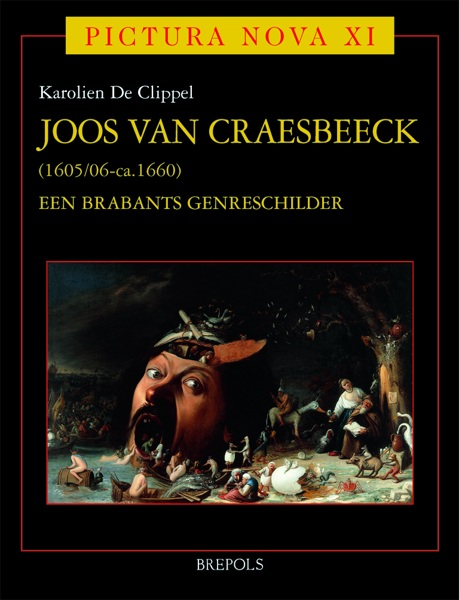
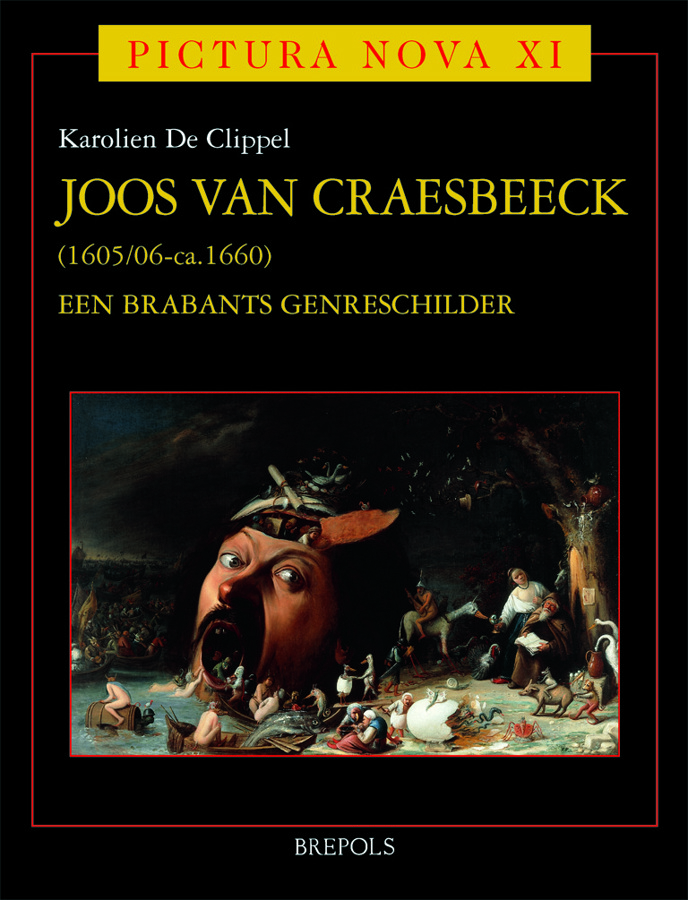
Joos van Craesbeeck was one of the leading genre painters in de seventeenth-century Southern Netherlands. As the only known pupil of Adriaen Brouwer, he contributed together with David II Teniers (1610-1690) and David III Ryckaert (1612-1661) to the revival of Flemish genre painting in the 1630s. His career was atypical by his combination of jobs. Originally trained as a baker, he did not start to paint until later in life, probably stimulated by the flowering of the arts in Antwerp. Initially he combined his painterly activities with the baker’s trade, but with the passing of time he devoted himself entirely to the arts. As so many painters, Joos van Craesbeeck was remarkably mobile. Coming from a prosperous and socially active family in the rather remote Hageland region, he spent his active life in the most important Brabantine cities of the era: first in Antwerp, than in Brussels. Over time, chroniclers have indulged in fantasies about Van Craesbeeck’s colourful nature to such an extent that in the nineteenth century, he and Adriaen Brouwer were presented as debauched cult heroes. Until today this romantic conceptualization determines the discourse about both painters. In the present book this image is adjusted by means of new findings about the life and work of Joos van Craesbeeck which are based on archival documents and the approximately hundred twenty paintings left behind by the artist. By situating Van Craesbeeck within the socio-economic and cultural world in which he worked, his oeuvre gains in meaning and his status as genre painter in light of reception-aesthetics is clarified. Van Craesbeeck’s works were primarily mainly intended for the free market and were bought by a cultivated and rather prosperous clientele with a sense of humour.
This book is the first monograph that deals exclusively with this fascinating and non-conformist Brabantine genre painter. The catalogue raisonné forms the core of this study which -- for the first time -- assembles and describes at length Van Craesbeeck’s paintings. The preceding essay is composed of three chapters. After the chronicle of Van Craesbeeck’s fortunes focussing on the socio-economic and cultural background of the painter as well as his social status, the attention shifts from the second chapter onwards onto his work. In an attempt to reconstruct contemporary expectations, chapter 2 maps out genre-specific and decorum-related qualities of the comical paintings. Finally, a chronological outline is presented which positions Van Craesbeeck’s undated oeuvre within contemporary Netherlandish painting.
Joos van Craesbeeck was één van de toonaangevende genreschilders in de zeventiende-eeuwse Zuidelijke Nederlanden. Als enige gekende leerling van Adriaen Brouwer, droeg hij samen met David II Teniers (1610-1690)en David III Ryckaert (1612-1661) bij tot de heropleving van de Vlaamse genreschilderkunst in de jaren 1630. Zijn loopbaan verliep atypisch door zijn cumul van beroepen. Oorspronkelijk was hij opgeleid als bakker. Wellicht geprikkeld door het Antwerpse artistieke elan, leerde hij nog op latere leeftijd het schildersvak aan. Terwijl hij aanvankelijk zijn schilderkunstige activiteiten met het bakkersberoep combineerde, wijdde hij zich later volledig aan het kunstenaarsschap. Zoals menig schilder in die tijd, was Joos van Craesbeeck buitengewoon mobiel. Afkomstig uit een welvarend en maatschappelijk geëngageerd gezin in het enigszins afgelegen Hageland, bracht hij zijn actieve leven door in de belangrijkste Brabantse steden van het moment: eerst in Antwerpen, dan in Brussel. Omtrent Van Craesbeecks kleurrijke natuur werd dermate gefabuleerd dat hij tijdens de negentiende eeuw samen met Adriaen Brouwer als liederlijke cultuurheld werd opgevoerd. Deze romantische beeldvorming bepaalt nog steeds het gangbare discours over beide schilders. In dit boek wordt dit beeld bijgesteld aan de hand van nieuwe bevindingen omtrent het leven en werk van Joos van Craesbeeck op basis van archiefbescheiden en de zowat honderd twintig schilderijen die kunstenaar ons heeft nagelaten. Door Van Craesbeeck te situeren binnen de socio-economische en culturele wereld waarin hij werkzaam was, wint zijn oeuvre aan betekenis en wordt zijn statuut als genreschilder in het licht van de receptie-esthetica opgehelderd. Van Craesbeecks werken waren hoofdzakelijk bestemd voor de vrije markt en werden gekocht door een gecultiveerd, vrij welvarend en lachgraag publiek. Dit boek is de eerste monografie omtrent deze fascinerende en non-conformistische Brabantse genreschilder.