Healthcare in Early Medieval Northern Italy
View publication
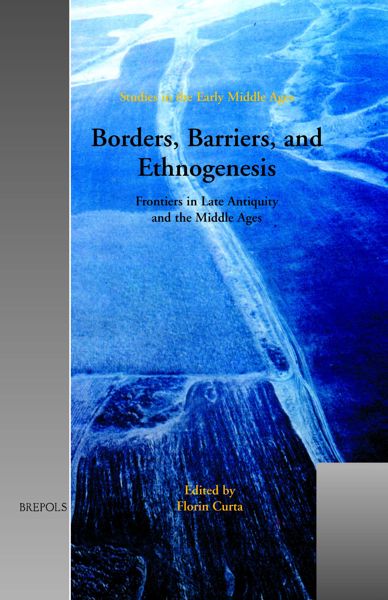
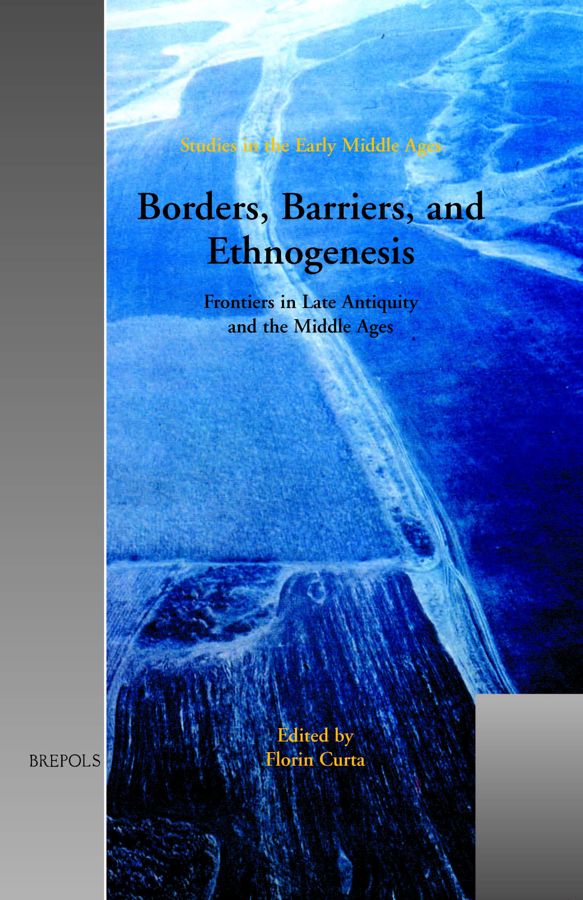
This collection addresses current shifts in the social and cultural construction of borders as they relate to the medieval period.
This collection addresses an audience of early medievalists with an interest in material culture and its use in building ethnic boundaries. The traditional concept of frontier is one of current debate by historians and archaeologists alike, but sometimes without reference to each other. For instance, the social and cultural construction of (political) frontiers remains outside the current focus of post-processualist archaeology, despite the significance of borders for the representation of power, one of the most popular topics with archaeologists interested in symbols and ideology. Similarly, historians of the early Middle Ages have only recently developed an interest in the political manipulation of cultural difference across state frontiers. Perhaps the most interesting aspect of this new direction of research is the emphasis on political frontiers as crucial for the creation, rather than separation, of ethnic configurations. Recent work on the relation between monastic communities and political frontiers has shown the potential for a study of frontier symbolism. The idea of the present volume grew out of the realization that there was a great deal of new work being done in this direction which deserved a wider audience. This was true both of studies of late antique frontiers and of more recent research on medieval frontier societies. In addition, several authors address the issue of religious identities and their relations with ethnicity and state ideology. In that respect, the book is directed to a large audience, particularly because of its wide geographical range, from Iberia and the Balkans to Cilicia and Iran.
Introduction - Florin Curta
The Byzantine-Arab Borderland from the Seventh to the Ninth Century - Ralph-Johannes Lilie
Civilization versus Barbarians? Fortification Techniques and Politics in Carolingian and Ottonian Borderlands - Joachim Henning
The Limes Saxoniae as Part of the Eastern Borderlands of the Frankish and Ottonian-Salian Empire - Matthias Hardt
Remarks on the Archaeological Evidence of Forts and Fortified Settlements in Tenth-Century Bulgaria - Rasho Rashev
Moving Earth and Making Difference: Dikes and Frontiers in Early Medieval Bulgaria - Paolo Squatriti
Reconceptualizing the Seljuk-Cilician Frontier: Armenians, Latins, and Turks in Conflict and Alliance during the Early Thirteenth Century - Sara Nur Yildiz
Ethnic and Territorial Boundaries in Late Antique and Early Medieval Persia (Third to Tenth Century) - Touraj Daryaee
Acculturation and Ethnogenesis along the Frontier: Rome and the Ancient Germans in an Archaeological Perspective - Sebastian Brather
Frontier Ethnogenesis in Late Antiquity: The Danube, the Tervingi, and the Slavs - Florin Curta
The Shadow of a Frontier: The Walachian Plain during the Justinianic Age - Eugen S. Teodor
Ethnicity, Rulership, and Early Medieval Frontiers - Michael Kulikowski
Frontiers and Ethnic Identities: Some Final Considerations - Walter Pohl