Piano Culture in 19th-Century Paris
View publication
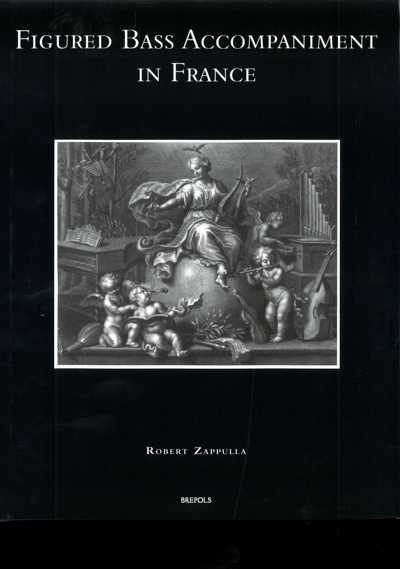
It is the aim of this study to give as full an accounting as possible of basse continue performance as it is documented in the numerous seventeenth and eighteenth century treatises produced in France.
"Zappulla's book (...) deserves a place in the library of every conscientious continuo player as well as every scholar of French Baroque music." (A. Haas in Early Keyboad Journal, vol. 19, 2001)
This comprehensive study basse continue practice supplements an already sizeable body of literature on thorough bass accompaniment, the emphasis of which has clearly been Italian and German theoretical works. The numerous French accompaniment treatises written during the XVIIth and XVIIIth centuries seem to have been, with only a few choice exceptions, unjustifiably dismissed by many modern scholars as little more than harmonic tutors, and the discipline of musicology - particularly as it relates to historical performance practice - has definitely suffered as a result. These works certainly do not deserve such a fate, for they provide not only unique documentation of French harmonic theory as it evolved over the course of more than a century, but a wealth of important information regarding XVIIth and XVIIIth century French performance practice as well. It is the aim of this study to give as full an accounting as possible of basse continue performance as it is documented in the numerous XVIIth and XVIIIth century treatises produced in France, beginning with Nicholas Fleury´s Méthode pour facilement a toucher le théorbe sur la basse-continuë (1660) and continuing through Pierre-Joseph Roussier´s Traité des accords, et de leur succession (1764) and his L´harmonie pratique, ou exemples pour le Traité des accords (1775). The issues dealt with in the treatises are treated systematically, and provide the framework for the entire study.