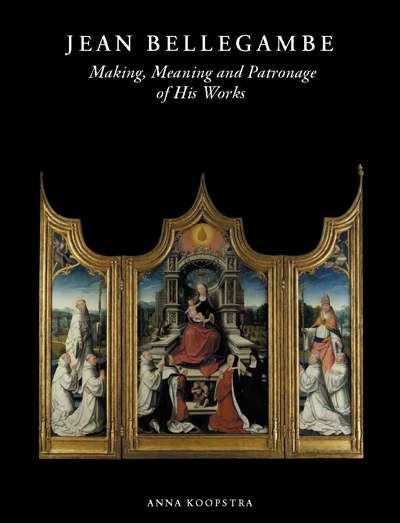
Jean Bellegambe (c. 1470-1535/36)
View publication
"The authors carefully analyze each work associated with Engebrechtsz, addressing attribution, style, subject, patronage, and working procedure. As a result, the artist emerges more clearly as a figure of accomplishment and influence, and as the head of a productive workshop. The present book now serves as the standard work on Engebrechtsz. It also lays the groundwork for other figures, such as Pieter Cornelisz. and Aertgen van Leyden, to come out of the shadows and to help define a more nuanced history of North Netherlandish art." (Ellen Konowitz, in: HNA Review of Books, March 2015, http://www.hnanews.org/hna/bookreview/current/16_engebrechtsz032015.html)
"Fruit d'un travail qui a duré quelque quinze ans, le présent volume, à la fois livre d'art et livre savant, offre l'enquête la plus complète possible en l'état actuel des connaissances techniques d'investigation et des pièces d'archives conservées sur le travail de Cornelis Engebrechtsz, de ses trois fils - Pieter, Cornelis et Lucas - et de son atelier." (dans: Bulletin de la Société Française d'Étude du Seizième Siècle, n° 80, décembre 2014, p. 36-37)
"The present study, an important addition to the recent outpouring of publications on early sixteenth-century Netherlandish painters, is beautifully produced by Brepols and deftly carried out by Jan Piet Filedt Kok in partnership with Gibson." (Dan Ewing, in: The Burlington Magazine, CLVII, November 2015, p. 789)
”This beautifully illustrated, up-to-date monograph offers many new insights and provides a balanced blend of art historical and technical analysis that will be fundamental for future research on Engebrechtsz” (Lynn F. Jacobs, in Renaissance Quarterly, 69/2, 2016, p. 674-675)
Jan Piet Filedt Kok (1943) studied art history at the University of Amsterdam. His publications cover early Netherlandish and seventeenth-century Dutch paintings and drawings, as well as fifteenth to twentieth-century printmaking, collecting history and restoration issues.
Walter S. Gibson (1932) is Andrew W. Mellon Professor of the Humanities Emeritus at Case Western Reserve University in Cleveland. He has published extensively on the late medieval and early Renaissance art of the Low Countries.
Yvette Bruijnen (1967) received her doctorate at the Free University Amsterdam. Her articles and lectures are mainly on early Netherlandish and Dutch seventeenth-century painters.
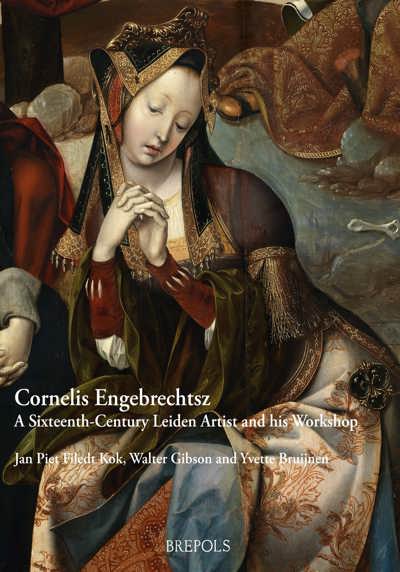
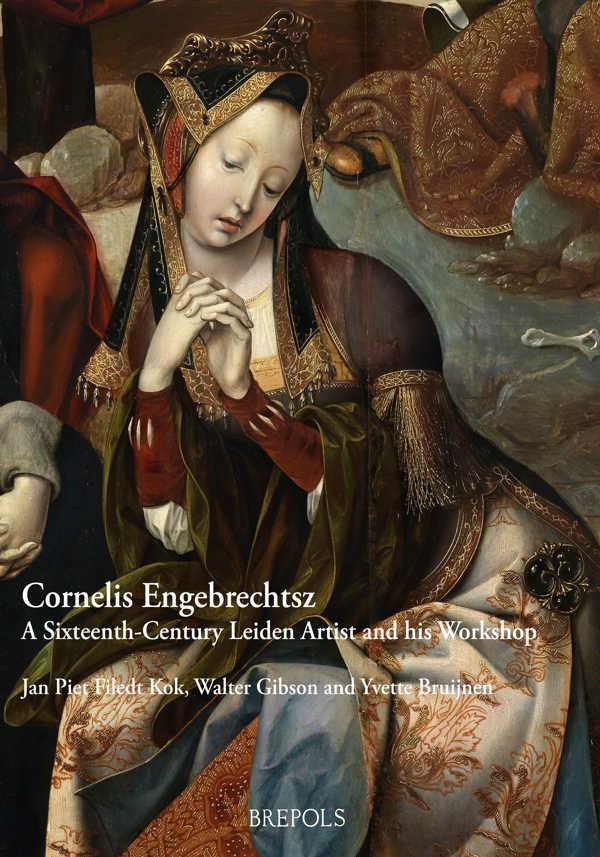
Cornelis Engebrechtsz (c. 1460/62-1527) was the first major Leiden painter to whom works can be attributed with certainty. They include a Lamentation Triptych from c. 1508 and a Crucifixion Triptych that was probably executed a decade later, both of which were made for the Mariënpoel Convent near Leiden and are now in Museum De Lakenhal in Leiden. These monumental triptychs display the influence of the dynamic style and palette of the Antwerp Mannerists, including splendid gold brocades. On the basis of the documented works by Engebrechtsz, no more than a dozen paintings and some fragments can be attributed to him personally, but many more can be connected to his workshop, which specialized in devotional works. Engebrechtsz’s pupils included his three sons Pieter (c. 1490-1560/61), Cornelis (c. 1493-1546) and Lucas (c. 1495-before July 1552). Although they must have played an important role in the workshop, it has so far proved difficult to associate specific paintings with them.
Taking Walter Gibson’s 1977 dissertation on Engebrechtsz and his workshop as its point of departure, the present volume also draws upon the subsequent technical investigation of many of the paintings. The spectacular underdrawings revealed with infrared reflectography has given better insight into the working methods of the artist and his workshop. Moreover, the study of the gold-brocaded velvets by Esther van Duijn clarifies his use of a variety of patterns, while Peter Klein’s dendrochronological examination of the panels helps determine a chronology of the oeuvre. All this makes it possible to characterize more clearly Engebrechtsz’s stylistic development, his workshop production and the different hands involved. The new findings are presented in different chapters, which are complemented by a complete catalogue of the paintings and drawings by Engebrechtsz and his workshop.
In addition, a complete survey of the monogrammed and/or dated drawings by Pieter Cornelisz, Engebrechtsz’s eldest son, is presented here for the first time, providing a firmer basis for the attribution of some paintings to him. Finally, the present volume is enhanced by documented biographies of Cornelis Engebrechtsz and his sons Pieter, Cornelis and Lucas. The known archival documents are complemented by an abundance of unpublished documents, richly enhancing our knowledge of the lives, careers and personalities of this family of artists.