Household, Women, and Christianities
View publication
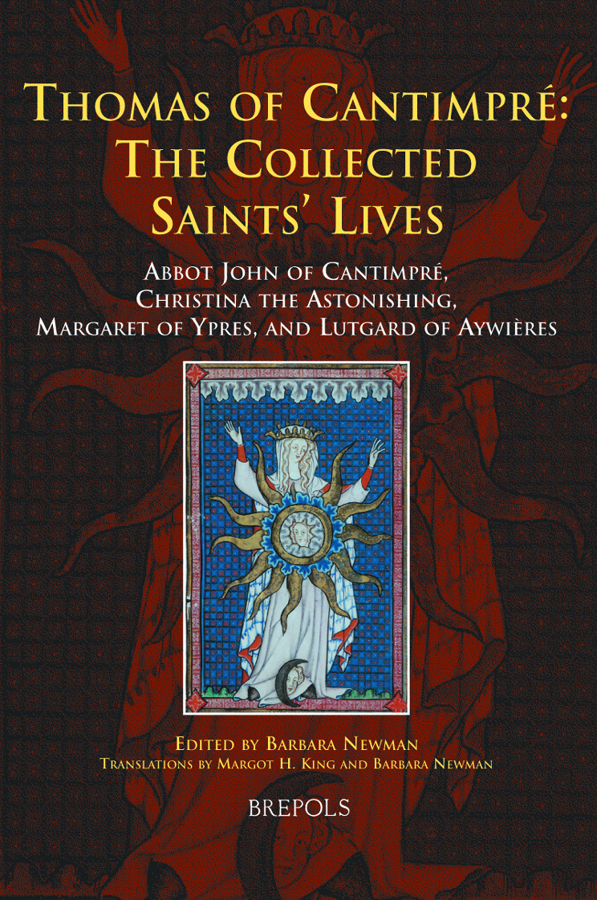
This volume contains tranlations of four lively and eventful lives recorded by the Dominican hagiographer Thomas of Cantimpré (c. 1200-c. 1270).
"De uitgave is gebeurd volgens alle actuele wetenschappelijke standaards: een ruime inleiding om de context te schetsen, een uitgebeid kritisch apparaat om de teksten inzichtelijk te maken en een degelijk register. Aanbevelenswaardig!" (JG in www.christusrex.be, prospectie : 16/12/2008)
"This collection od medieval texts is valuable for scholars of medieval folklore and narrative in general. (...) this book is simply an ejoyable read and I recommend it highly." (S. Stanzak in: Journal of Folklore Research, online, 30 March 2009)
"This is an important edition, particularly in that it brings all of the Cantimpré lives together, but also in Newman's insightful introduction and footnoting throughout the text. (...) This volume is a terrific addition to the bookshelf of any scholar who works on late medieval hagiogrpahy, the beguines, women in the Middle Ages, or Dominican spirituality, among other topics." (J. Brown, in: The Medieval Review, 09.05.14)
The Dominican Thomas of Cantimpré (c. 1200-c. 1270) was a key figure in the 'evangelical awakening' of the thirteenth century. A prolific hagiographer, he lauded such diverse subjects as the abbot and apostolic preacher John of Cantimpré; the teenaged ascetic Margaret of Ypres, an urban recluse who died at twenty; Lutgard of Aywières, a Cistercian nun and mystic; and the theatrical, mentally troubled Christina 'the Astonishing' of Sint-Truiden. Thomas had few peers in portraying the ritual theatre of penance. He gives us such memorable scenes as a naked moneylender led out of a pit by a rope, a formerly rapacious prince kissing his peasants’ feet as he restores their stolen goods, St Christina leaping into fires and boiling cauldrons to save souls in purgatory, and the deceased Pope Innocent III in agony, begging St Lutgard for her prayers. In this volume readers will find all four lively and eventful lives between the same covers for the first time. The Life of Abbot John of Cantimpré has been newly translated by Barbara Newman, who has also supplied a new introduction. The other three Lives are revised reprints from Margot H. King's Peregrina Translations Series.