Erasmus and the Renaissance Republic of Letters
View publication
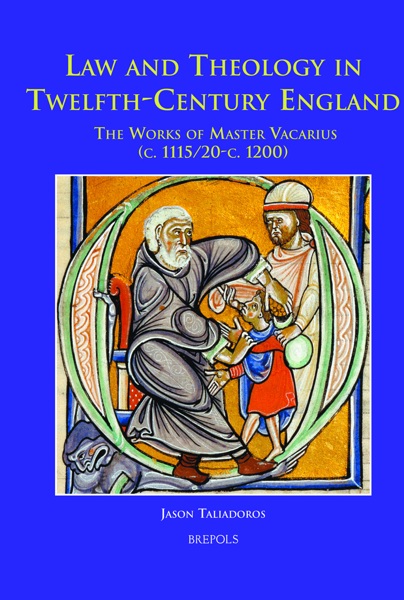
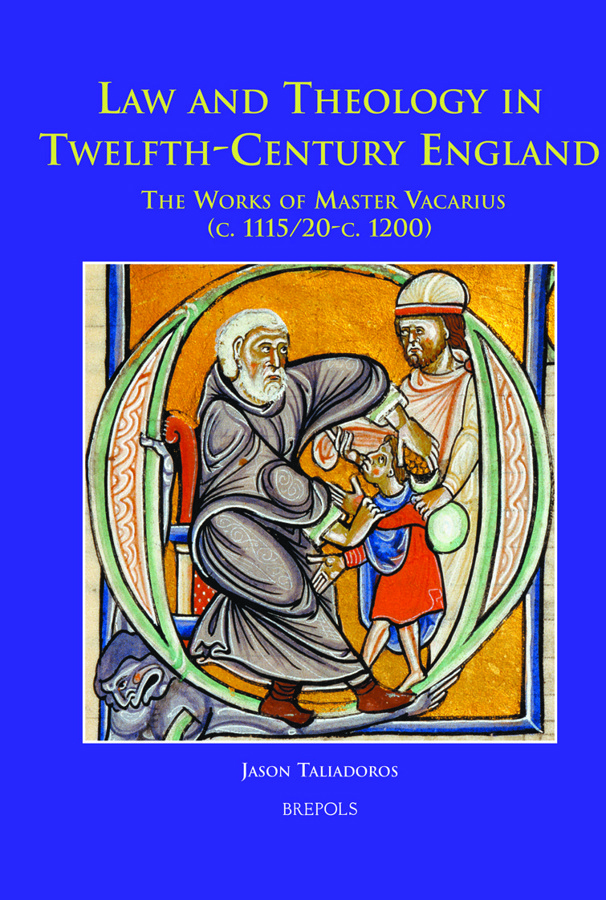
This book explores four major, and paradoxical, works of the legal and theological thought of Master Vacarius (c.1115/20 - c.1200), the renowned twelfth-century jurist.
"Taliadoros's analysis of Vacarius's individual works is valuable. The clear and succinct summaries of the textual issues involved and of previous scholarship are very welcome, especially since some of it is otherwise hard to survey. If Vacarius and his many accomplishments turn out to be difficult to pin down, that fact should inspire more work. Taliadoros's book is a significant step in the right direction." (A. Winroth in: Speculum, July 2008, p. 768)
"Taliadoros thoroughly examines Vacarius' activities in England and discusses the rich English historical literature that this italian jurist has inspired." (K. Pennington in Journal of Ecclesiastical History, Vol. 60/4, October 2009, p. 795-796)
This book explores the legal and theological thought of Master Vacarius (c.1115/20 - c.1200), the renowned twelfth-century jurist. It focuses on this Italian master’s four works, composed in the second half of the twelfth century, which deal with the resolution of conflict in law and theology. Vacarius is a paradox for scholars. They have found it difficult to reconcile his role as a legal teacher, notably through his textbook the Liber pauperum ('Book of the Poor'), which established a school of Roman law at Oxford, with his ‘extra-legal’ works on marriage, Christology and heretical theology. This study accounts for this paradox by exploring these three extra-legal treatises, composed in the 1160s and 1170s, in light of Vacarius' legal textbook. The author argues that Vacarius applies the legal method of the ius commune (European common law) to theological and sacramental debates. In this way, Vacarius represents a trend in medieval intellectual history, particular to the twelfth-century renaissance, which has been little appreciated to date - the hermeneutic of the ‘lawyer-theologian’.