Romance and Rhetoric
View publication
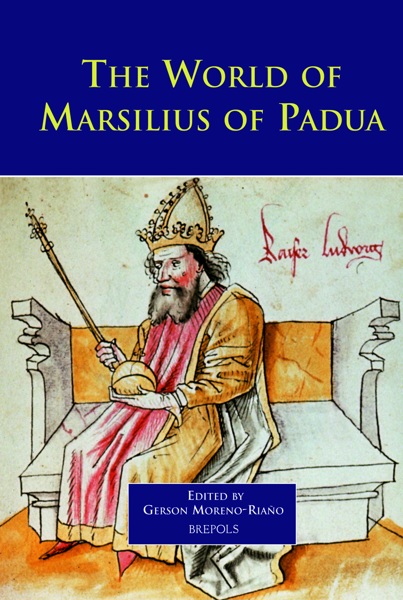
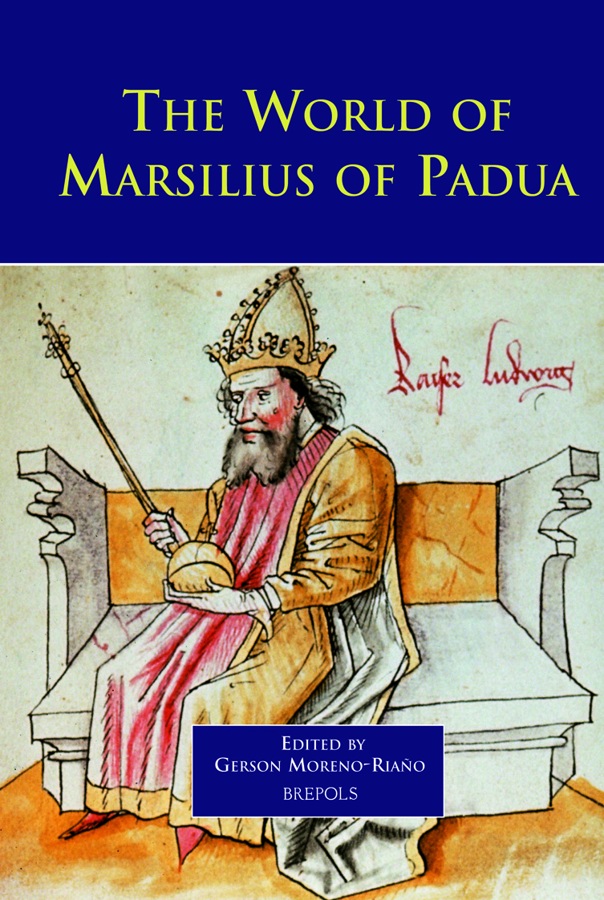
Readers will discover the wealth and complexity of Marsilius’s thought as well as the startling range of approaches and methods of interpretation taken in the study of his work.
"The World of Marsilius of Padua is a well-presented, (...) well-chosen collection of essays. (...) it is to be hoped that the appearance of this volume will stimulate scholars to begin to explore further the possibilities Marsilius presents." (C. Jones, in: The Medieval Review, 08.01.14)
Perhaps no author of the Latin Middle Ages has been the subject of so much controversy and even vitriol than Marsilius of Padua (ca. 1275-1342/43). As author of the notorious heretical tract, the Defensor Pacis, Marsilius became an infamous figure throughout the intellectual and political centres of Europe during his own lifetime. His magnum opus, a sharply pointed dissection of the damage done to earthly political life by the incursions of the papacy and a plea for conciliar ecclesiology, was repeatedly condemned during the fourteenth century and in later years. Yet the treatise continued to be disseminated and received translation into several vernacular languages. During the Reformation, Marsilius and his Defensor Pacis enjoyed another round of acclamation and denunciation, depending upon one’s confession.
In July 2003, a group comprising many of the world’s most renowned scholars of medieval political thought gathered for a 'Marsilius of Padua World Congress', held in conjunction with the tenth International Medieval Congress held in July 2003 in Leeds. The present volume contains selected papers originally prepared for that meeting. The contents represent a compendium of innovative scholarly contributions to the understanding of Marsilius, his life and times, and his lasting impact on Western thought. Included are chapters that reflect a range of recent, ground-breaking research by both senior scholars and the future leaders in the field.
After a general survey of the current state of scholarship on Marsilius, the volume divides into three thematically organized sections, covering a variety of historical, textual, methodological, theological, and theoretical questions. In all of the essays, readers will discover the wealth and complexity of Marsilius’s thought as well as the startling range of approaches and methods of interpretation taken in the study of his work. The volume’s selection of authors is international in scope and represents the first interdisciplinary scholarly collaboration in the field of Marsilian studies to occur in the twenty-first century.