The Crisis of the Oikoumene
View publication
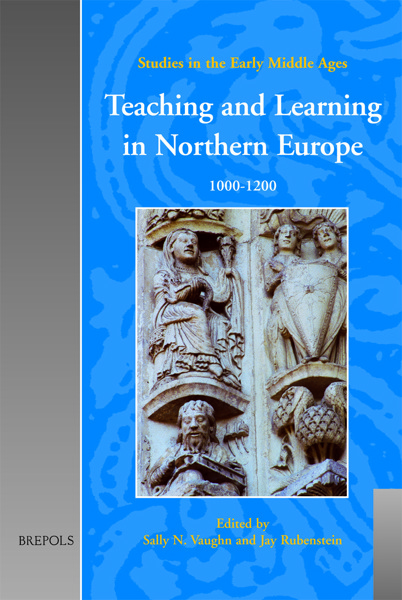
The focus throughout this volume is on the personalities and personal relationships between teachers and students in medieval Europe, thus recreating the human connections that lay behind medieval humanism and the Twelfth-Century Renaissance.
The essays in this collection focus not on texts but on people, specifically on teachers and their students, beginning with the late Carolingian era and continuing through the creation of monastic and secular schools in the centuries before the first universities. Central to the articles in this volume are the schools and communities of Northern France and England, including Reims, Bec, Soissons, and Canterbury, whose patterns of thought and learning gave shape to intellectual endeavours throughout medieval Europe. In addition to some of the most prominent personalities of the day (among them Gerbert of Reims, Lanfranc and Anselm of Bec, Ivo of Chatres, and John of Salisbury), the contributors examine those teachers and students who worked in the shadows: figures like the biblical exegete Richard of Préaux and the musical innovator Theinred of Dover. The focus throughout the volume is on personalities and personal relationships, thus recreating the human connections that lay behind medieval humanism and the Twelfth-Century Renaissance. Taken together, the essays here create a coherent and compelling picture of the tumultuous time before the universities came to organize and take control of teaching and learning—a seminal period when teaching methods and curricula grew out of the particular experience of specific teachers and their interactions with their students.
Introduction: Teaching and Learning from the Tenth to the Twelfth Centuries - Sally N. Vaughn and Jay Rubenstein
Prologue: Teaching and Learning History in the School of Reims, c. 800–950 - Michael E. Moore
Master and Community in Tenth-Century Reims - Jason K. Glenn
Lanfranc at Caen: Teaching by Example - Priscilla D. Watkins
Anselm of Bec: The Pattern of his Teaching - Sally N. Vaughn
Lessons of Love: Bishop Ivo of Chartres as Teacher - Bruce C. Brasington
Guibert of Nogent’s Lessons from the Anglo-Norman World - Jay Rubenstein
St Anselm’s Forgotten Student: Richard of Préaux and the Interpretation of Scripture in Early Twelfth-Century Normandy - William L. North
Educating the Bishop: Models of Episcopal Authority and Conduct in the Hagiography of Early Twelfth-Century Soissons - John S. Ott
Monks and Clerks in Search of the Beata Schola: Peter of Celle’s Warning to John of Salisbury Reconsidered - John D. Cotts
Reason and Original Thinking in English Intellectual Circles: Aristotle, Adelard, Auctoritas, and Theinred of Dover’s Musical Theory of Species - John L. Snyder
The Model of Scholastic Mastery in Northern Europe c. 970–1200 - Mia Münster-Swendsen