

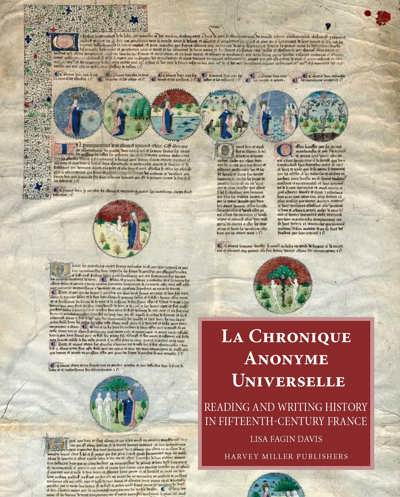
La Chronique Anonyme Universelle
View publication
"Pächt's lessons are as timely now as thitrty-five years ago." (P. Hills in The Burlington Magazine, cxlvii, January 2005, p. 47-48)
Otto Pächt, one of the most significant art-historians of the ‘Vienna School’, and well known for his analyses of Early Netherlandish art, turns his attention in this publication to the humanist circle of Early Renaissance painters in Venice, dominated by Jacopo Bellini, his sons Gentile and Giovanni, and also his son-in-law Andrea Mantegna. It was a period of newly awakened interest in the Antique, of studies made directly from nature, and of trial and error in the technique of perspective. And in addition, a new awareness of the role of light and colour in the devotional and often monumental images of the Madonna, of altarpieces and of allegories contributed to the founding of what we now recognise as the hall-mark of Venetian painting, that culminated with Titian.
Of the Bellini family, it has been Giovanni who was generally regarded as the major figure of the dynasty. Pächt, however, devotes particular attention to Jacopo’s work, interpreting it as the basis for his sons’ later development. He analyses Jacopo’s London and Paris Sketchbook drawings, demonstrating where Late Gothic elements can be seen to be overtaken by the need to give perspective depth to the image, and how subsequent painting took account of these changes. This is also the essence of Pächt’s examination of Mantegna’s work, where the construction of space and depth is the key to our understanding of Mantegna’s creative process.
Turning to the next generation of the Bellini family, Pächts guides our eyes to appreciate the refinement and perception of Gentile’s portraits, and finally takes us step by step through the works of Giovanni, where fantasy combines with the play of colour and light in creating compositions, devotional images, and landscape settings of perfect harmony and beauty.